Milwaukee M12 Copper Tubing Cutter
As an Amazon Associate I earn from qualifying purchases.
The Milwaukee M12 Copper Tubing Cutter is one of those professional tools that addresses a very familiar problem: cutting copper pipe repeatedly, accurately and without constantly turning a manual cutter by hand.
For plumbers and heating engineers, preparing pipework is part of everyday installation work. Whether fitting new heating circuits, altering existing supplies or working inside cramped service cupboards, the number of cuts can quickly add up.
The Milwaukee 2471-20 replaces much of that repetitive hand movement with a battery-powered rotating cutting head.
Its automatic diameter adjustment, compact cutting mechanism and cordless operation make it particularly interesting for tradespeople who spend considerable time working with copper.
This model is also familiar to Zennh’s editor, who owned one before retiring from a long career in plumbing and central heating and remembers it as a particularly useful tool.
However, this is a specialist copper cutter rather than a replacement for every manual pipe-cutting tool.
Why It Works for Plumbing and Heating
A conventional copper tubing cutter is simple, dependable and effective.
Position the cutting wheel against the pipe, rotate the cutter and gradually increase the pressure until the copper separates.
There is nothing particularly complicated about the process.
However, cutting dozens of pipes during an installation means repeating the same movements throughout the working day.
The Milwaukee M12 changes that process.
Its motor-driven cutting head rotates around the tubing, while the mechanism automatically adjusts to the supported pipe diameter.
Rather than repeatedly twisting a cutter around the pipe, the operator positions the tool, supports the pipe correctly and operates the trigger.
Milwaukee specifies a 500 RPM motor and claims cutting speeds up to ten times faster than conventional manual cutters.
Actual cutting times will depend on pipe diameter, condition and working access.
For tradespeople regularly preparing copper pipe, the benefit is less repetitive hand movement and potentially faster preparation.
Automatic Cutting Without Constant Adjustment
One of the most useful features is the automatic diameter-adjusting mechanism.
The cutter accommodates Type K, L and M copper tubing from 3/8 inch to 1 inch nominal trade size.
That corresponds to outside diameters from 1/2 inch to 1-1/8 inches.
These are common sizes in American plumbing installations, although the tool is not intended for every international pipe dimension.
With a traditional adjustable cutter, moving between different pipe sizes involves repositioning the cutting wheel manually.
The Milwaukee mechanism handles that adjustment as part of its cutting operation.
This makes it particularly convenient when preparing several pieces of copper tubing in succession.
It also reduces the temptation to apply excessive manual cutting pressure.
However, correct positioning remains essential. The pipe must sit squarely in the cutting mechanism and be properly supported.
Automation does not eliminate the need for good workmanship.
Useful in Confined Working Spaces
Plumbing and heating work rarely takes place entirely on a comfortable workbench.
Copper pipes frequently run through cupboards, between framing members, around equipment and close to walls.
In these locations, finding enough space to rotate a conventional pipe cutter can be frustrating.
The Milwaukee uses a rotating cutting head that operates around the tubing without requiring the entire tool body to travel around the pipe.
Milwaukee states that the cutter can operate with as little as 1-1/2 inches of clearance around suitable installed tubing.
This can be a genuine advantage when access is restricted.
Its inline body also provides reach into certain awkward positions.
However, the complete tool still needs enough room to approach the pipe, position the head and operate safely.
For extremely restricted spaces, a small manual close-quarters cutter may remain the more practical option.
What It Feels Like to Use
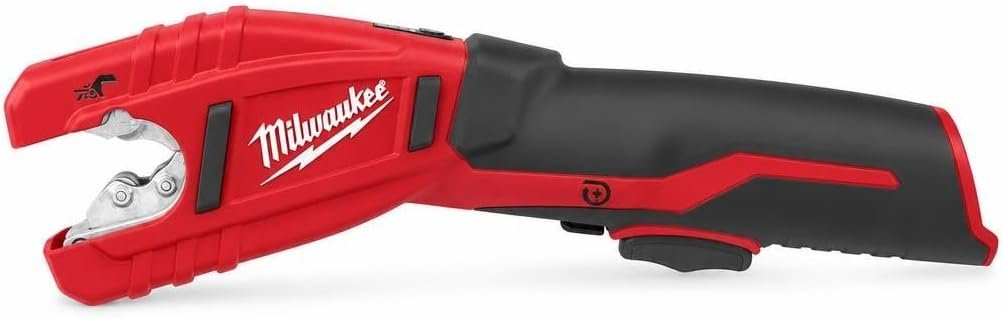
The Milwaukee has a substantial, purpose-built appearance.
Its familiar red and black housing combines a relatively slim handle with a larger metal cutting head.
The inline shape is quite different from a conventional drill-style power tool.
The handle provides a natural gripping position, while the cutting mechanism remains at the front where it can be aligned with the tubing.
The tool is considerably larger than a pocket-sized manual cutter, but its powered operation removes the need for repeated wrist rotation during cutting.
A built-in LED illuminates the cutting area.
This is a thoughtful feature when working beneath sinks, inside cupboards or near poorly lit service equipment.
There is also an onboard battery fuel gauge.
Being able to check the remaining charge is useful when working away from the van or workshop.
For anyone already using Milwaukee’s M12 system, the familiar battery arrangement adds convenience.
A Tool Designed for Repeated Copper Cutting
Milwaukee developed the 2471-20 around professional copper pipe preparation.
The cutting head uses metal components designed to resist corrosion and everyday jobsite conditions.
The manufacturer also incorporates electronic overload protection and a reinforced body construction.
Milwaukee advertises up to 200 cuts from a suitable battery charge under its stated conditions.
Actual results depend on battery capacity, tube size and operating conditions, so that figure should be treated as a manufacturer claim rather than a guaranteed result on every job.
The cutting wheel is replaceable, which matters for equipment intended to remain useful over time.
Like any rotary cutter, it still needs appropriate maintenance.
Keeping the cutting mechanism clean, inspecting the wheel and following Milwaukee’s lubrication instructions will help preserve reliable operation.
Where It Fits Alongside Other Plumbing Tools
The Milwaukee M12 makes particular sense when repetitive cutting is a regular part of the working day.
However, a professional plumbing toolkit still benefits from conventional manual cutters.
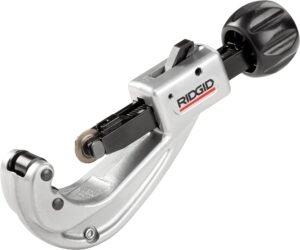
Our article on the RIDGID 151 Quick-Acting Tubing Cutter explores a more traditional approach.
The RIDGID provides controlled manual cutting, a broad adjustment range and an integrated reamer without requiring a battery.
For occasional cuts or situations where the powered Milwaukee cannot fit, a manual cutter remains valuable.
The M12 also complements other cordless installation equipment.
Once copper has been cut and properly prepared, compatible press-fit systems require suitable equipment for making the finished joint.
Our guide to the Milwaukee M12 FORCE LOGIC Press Tool explains another specialist tool designed for professional copper installations.
The cutter prepares the pipe; the appropriate pressing equipment completes compatible press-fit connections.
Neither tool replaces the need to follow the fitting manufacturer’s installation requirements.
The Drawbacks
The Milwaukee M12 Copper Tubing Cutter is a useful professional tool, but its powered mechanism introduces several compromises.
Understanding these limitations is important, especially when choosing equipment that will be used regularly on plumbing and heating installations.
Battery and Charger Sold Separately
The 2471-20 is supplied as a bare tool.
A compatible Milwaukee M12 battery and charger are required, but neither is included with this particular model.
For tradespeople already using M12 equipment, that may be convenient.
However, someone buying into the battery platform for the first time will need additional equipment.
The cutter also becomes unusable when its battery is discharged.
Keeping a suitable charged battery available is therefore important during longer installations.
A manual cutter avoids this dependency entirely.
Limited to Specific Copper Tubing Sizes
The Milwaukee is designed for Type K, L and M copper tubing within its specified cutting range.
It is not a universal cutter for every plumbing material.
Plastic pipe, multilayer tubing, steel pipe and other materials require tools specifically approved for those applications.
The maximum outside diameter of 1-1/8 inches also excludes larger copper pipework.
Tradespeople working with several piping systems will still need additional cutting equipment.
It is important to check the actual outside diameter and material rather than relying solely on a familiar nominal pipe size.
Not Always Suitable for Extremely Tight Spaces
Although the rotating head requires relatively little clearance around the pipe, the entire tool still has to fit into the working position.
Its inline body is approximately 14 inches long.
In a very narrow cupboard or behind fixed equipment, there may not be enough room to approach the pipe correctly.
Short pipe sections close to fittings can also be awkward.
Milwaukee’s instructions specifically warn against attempting to cut off pieces shorter than 1/2 inch because they may become caught in the mechanism.
For restricted repairs, a compact manual cutter may be safer and easier to position.
The Pipe Must Be Properly Supported
The powered cutting mechanism requires careful positioning and appropriate workpiece support.
Milwaukee warns that unsupported tubing can rotate or move during cutting.
That creates a potential injury risk and may affect the quality of the cut.
This consideration is particularly important with loose lengths of copper on a bench.
The cutter should not be treated as a device that automatically holds and stabilises every workpiece.
Hands must remain clear of moving cutting components, and the manufacturer’s instructions should be followed.
Water Resistance Has Limits
The metal cutting head includes protection against corrosion and water exposure.
However, that does not make the complete electrical tool waterproof.
Plumbing environments frequently involve residual water, damp cupboards and occasional leaks.
The battery, electrical housing and internal components still require protection from excessive moisture.
Milwaukee specifically warns against immersing the tool or allowing liquid to enter it.
Individual owner reports have also described operational problems after significant water exposure, although those experiences do not establish a widespread defect.
Draining and isolating pipework appropriately before cutting remains important.
Cutting Wheels Need Maintenance
Although the powered mechanism reduces manual effort, it does not eliminate wear.
The cutting wheel gradually becomes dull and may eventually require replacement.
Metal particles and debris can also accumulate around the head.
Milwaukee specifies cleaning and lubrication of relevant cutting components as part of routine maintenance.
A damaged or blunt wheel should be replaced rather than forcing the tool to continue cutting.
Compared with a simple manual cutter, the powered mechanism introduces additional moving components that require attention.
Pipe Preparation Still Matters
A powered cutter can separate copper quickly, but that does not mean the pipe is immediately ready for a fitting.
Cut ends still need inspection for burrs, deformation and other defects.
Where required, internal and external deburring must be completed using a suitable tool.
For press-fit connections, correct pipe preparation and insertion depth are particularly important.
The Milwaukee saves effort during cutting, but it cannot replace those essential installation checks.
More Tool Than Occasional Users Need
Perhaps the biggest consideration is how frequently the cutter will be used.
For a plumber making numerous copper cuts every day, its powered operation offers a clear practical benefit.
For someone completing one small repair occasionally, the additional battery equipment, maintenance and storage requirements may be difficult to justify.
A quality manual cutter is simpler, lighter and immediately ready to work.
The Milwaukee earns its place through repetitive professional use rather than occasional convenience.
Who It Suits Best
The Milwaukee M12 Copper Tubing Cutter is particularly suitable for professional plumbers, heating engineers, mechanical installers and maintenance contractors.
Its greatest advantage is the reduction in repetitive hand cutting during jobs involving numerous suitable copper pipes.
The automatic adjustment and rotating cutting head are especially useful where speed and access matter.
It also makes sense for tradespeople already invested in Milwaukee’s M12 battery system.
However, those working mostly with plastic, multilayer or larger-diameter pipework may have less use for it.
For more professional cutting, gripping and installation equipment, explore our Plumbing & Heating collection.
Is It Worth the Plumbing Tool Bag Space?
The Milwaukee M12 Copper Tubing Cutter is a specialist tool with a clear professional purpose.
Its automatic adjustment, powered rotating head and close-quarters design address several familiar frustrations of everyday copper pipe installation.
The solid construction, replaceable cutting wheel and M12 battery compatibility add to its practical appeal.
Nevertheless, it cannot replace every manual pipe cutter.
Its material and size limitations, battery dependency and maintenance requirements mean that a well-equipped tradesperson will still need conventional cutting tools.
For plumbers and heating engineers who work regularly with copper, however, the Milwaukee offers a worthwhile way to reduce repetitive effort and make pipe preparation more efficient.
It is exactly the sort of purposeful, professionally focused equipment that deserves consideration in a serious plumbing toolkit.
As an Amazon Associate I earn from qualifying purchases.